Academic Art
Academic art grew out of the teaching methods of the French Académie des Beaux-Arts and shaped European painting from the 17th century into the early 20th. Its strongest period ran through the 19th century, when the Paris Salon rewarded carefully composed history paintings, portraits, and genre scenes. The style prized precise drawing, a smooth finish, and subjects drawn from history, mythology, and distant places. In this catalogue it appears through two painters: Charles Bargue, a French painter and lithographer, and Lawrence Alma-Tadema, known for scenes of Roman leisure.
Painters
Charles Bargue
Lawrence Alma-Tadema
Paintings
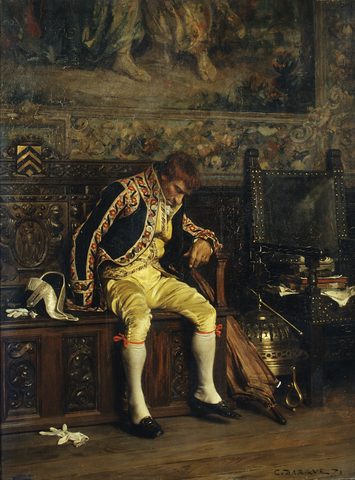
A Footman Sleeping
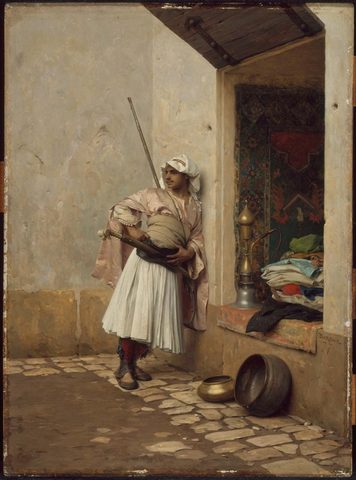
A Turkish Sentinel
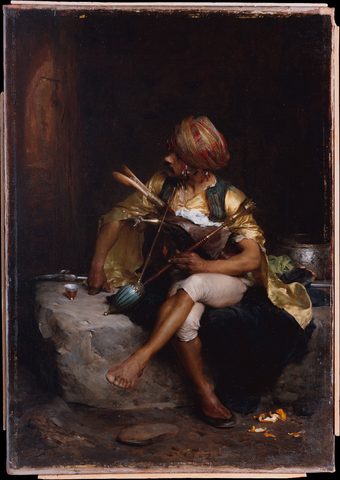
Bashi-Bazouk
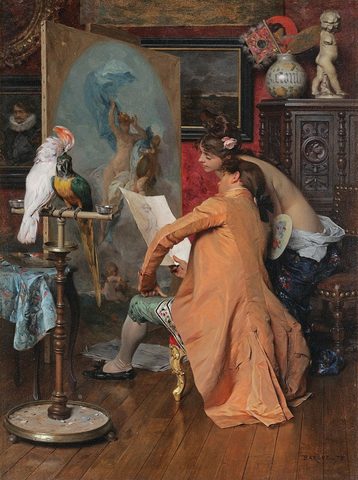
The Artist and His Model
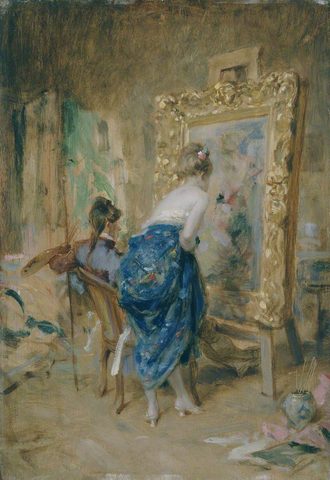
The Artist's Model
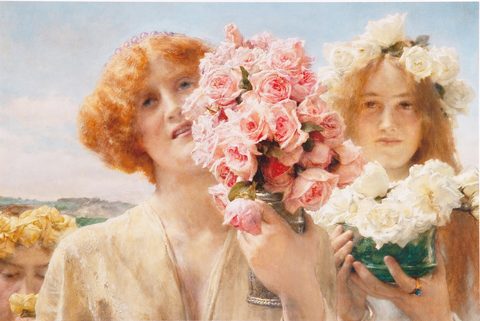
Summer Offering
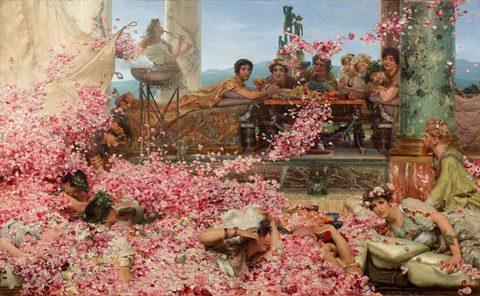
The Roses of Heliogabalus
What defines Academic art painting
Academic art painting is built on drawing. Artists trained by copying plaster casts and then live models, learning to measure anatomy, outline, and tonal modelling before touching color. Compositions tend to be ordered, with a clear focal point and a stage-like arrangement of figures. Color is often local and controlled, not broken into loose strokes; light is smooth and even, showing off accurate surfaces and textures. Large history paintings and allegories suited the highest academic rank, while portraits, genre scenes, and smaller studies allowed more personal subjects. Compared with Rococo and Romantic painting, Academic art often looks restrained and deliberately finished. It favors clarity over spontaneity and gives the human figure a central place, whether in a classical myth, an Orientalist scene, or a study of a model in the studio. The training system left visible habits: balanced spacing, careful edges, and a range of values that reads clearly from across a gallery.
Academic art painters in this catalogue
Charles Bargue was a French painter and lithographer whose careful figure studies and Orientalist subjects grew out of the academic system promoted by the Paris Salon. His catalogue works include A Footman Sleeping (1871), in the Metropolitan Museum of Art, and the studio scenes The Artist and His Model (1867) and The Artist's Model (1874), the latter in Amgueddfa Cymru. Bargue's evenly lit interiors and controlled edges show the academic preference for legible form. Two Orientalist works, Bashi-Bazouk (1875) and A Turkish Sentinel (1877), are also in the catalogue.
Lawrence Alma-Tadema brought the same academic finish to scenes of Roman and Greek life. His pictures of marble, metal, flowers, and textiles made him a popular exhibitor in the late 19th century. This catalogue includes The Roses of Heliogabalus (1888), in the Pérez Simón Collection, and Summer Offering (1911). His painting depended on careful archaeological detail and polished execution, qualities that aligned him with academic ideals even as his subjects leaned toward luxury and theater.
Where to see it
Major French institutions such as the Musée d'Orsay hold strong academic painting collections. The Metropolitan Museum of Art in New York and the Art Institute of Chicago also keep examples from the same training system.