Courbet Paintings: A Guide to Gustave Courbet
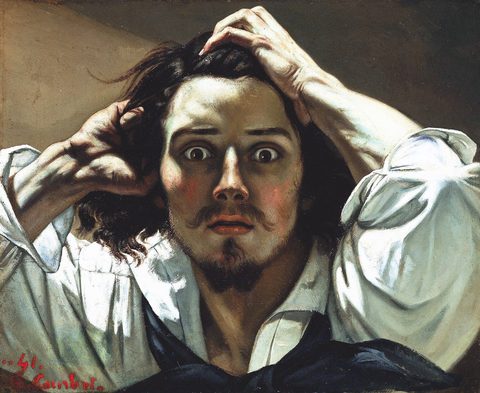
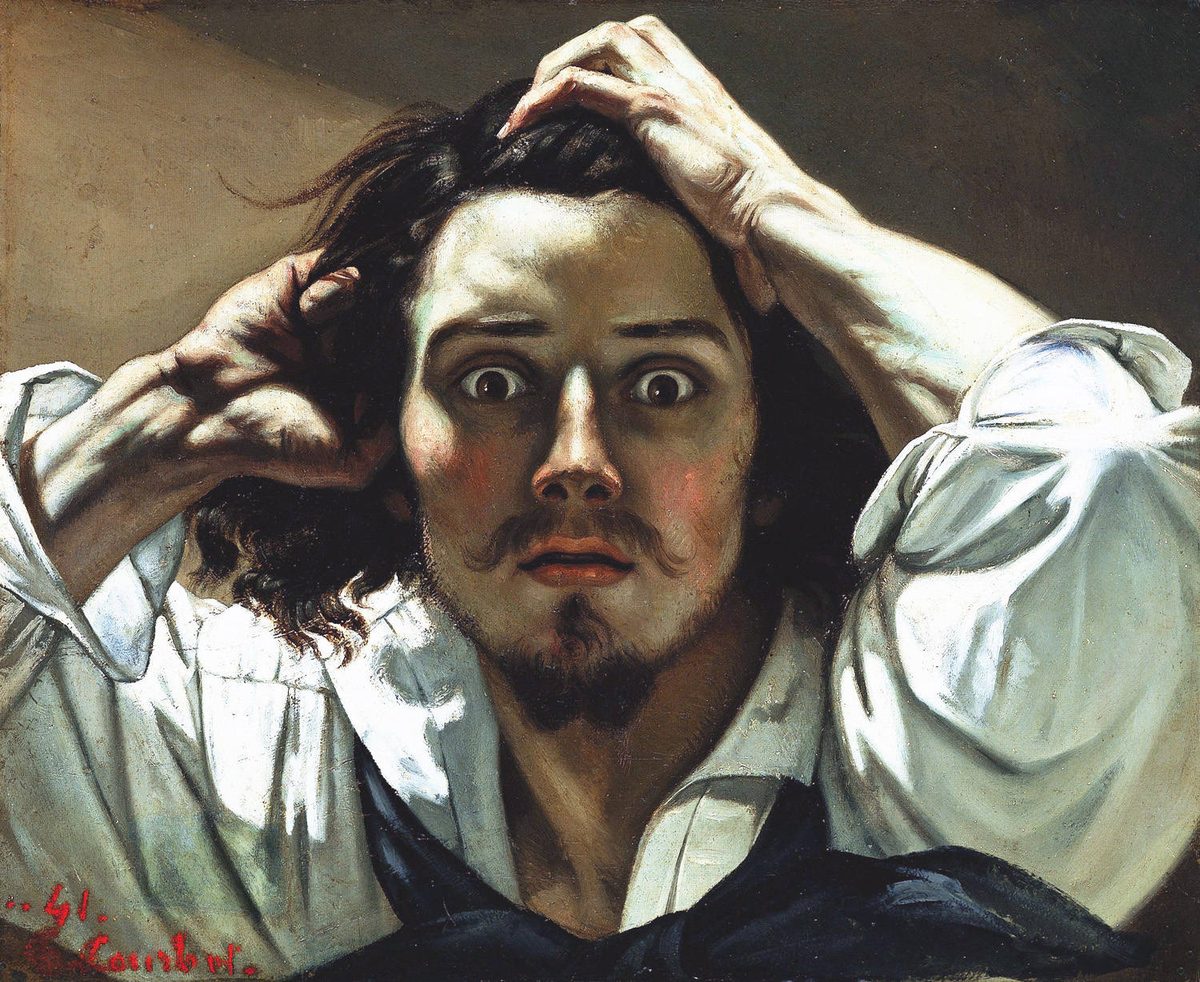
Gustave Courbet was a French painter born in Ornans in 1819 and died in 1877. He led the French Realism movement, painting working people, provincial funerals, rocky landscapes, and animals with the directness of someone recording what he saw. Courbet paintings still matter because they challenged the art establishment of the 1850s: a huge canvas of an ordinary burial, two laborers breaking stones, a meeting between friends on a road. His refusal to idealize peasants or mythologize the countryside pushed modern art toward real life. He also painted self-portraits early in his career. Museums in Paris, London, and Montpellier hold his work.
Life and training
Gustave Courbet was born on 10 June 1819 in Ornans, a small town in the Jura mountains near Besançon. His family owned farmland and vineyards, and the rocky countryside around the Loue River would reappear in his paintings for decades. In 1837 he began studies at the Collège Royal in Besançon, where he also took drawing lessons. In 1839 he moved to Paris. His parents expected him to train as a lawyer, but Courbet spent his time copying in the Louvre, studying Rembrandt, Velázquez, and Dutch and Flemish genre scenes. In the early 1840s he submitted dark, dramatic self-portraits to the Salon, with only occasional acceptance.
The years 1849-1850 became a turning point. Courbet returned to Ornans and painted The Stone Breakers, showing an old man and a young boy cracking stones by the roadside, and A Burial at Ornans, a large funeral scene filled with ordinary residents of his hometown. Both appeared at the Salon of 1850-1851, where critics attacked their plain figures and monumental format. Instead of retreating, Courbet made his reputation on the controversy. In 1855 the official Exposition Universelle rejected his enormous painting The Artist's Studio, so Courbet rented a site nearby and opened his own Pavilion of Realism. He showed about forty paintings and issued a short statement declaring his aim to record the manners, ideas, and appearance of his own time.
After 1855 Courbet traveled in France and Belgium, painted seascapes on the Normandy coast, hunting scenes, and sensuous nudes. He became a celebrity in Paris and abroad. In 1871, during the Paris Commune, he was elected to the Commune council and held a role in the removal of the Vendôme Column. After the Commune fell, a court held him liable for rebuilding costs. He fled to Switzerland in 1873 and settled in La Tour-de-Peilz on Lake Geneva, where he continued to paint until his death on 31 December 1877, at age 58.
Style and technique
Courbet painted in oil on canvas or board, often using a palette knife as much as a brush. Early self-portraits from the 1840s show dark backgrounds, strong side light, and a limited palette of browns, blacks, and warm flesh tones. In later landscapes he added greens, blues, and thick white for sky and surf. His paint surface could be heavy, with ridges left by the knife, especially in rocks, foliage, and wave foam. In seascapes, thick parallel strokes suggest moving water; in rock faces, scraped paint imitates limestone fissures. He refused to paint angels, saying he had never seen one. Realism for him meant painting the present: stone breakers, funeral goers, hunters, bathers, and limestone cliffs.
His compositions borrowed from old masters: Rembrandt's chiaroscuro, Velázquez's dignity of ordinary people, and Dutch group portraiture. But he enlarged everyday subjects to the scale of history painting, which shocked the Salon. In the 1850s he built dense, frieze-like arrangements with figures almost life-size. By the 1860s his palette lightened, and he painted more landscapes, nudes, and hunting scenes, often for private collectors. His brushwork became looser in river gorges and seascapes, where wave crests are smeared with bright lead white. Throughout, he avoided mythological or historical costume and relied on the weight of real bodies, soil, water, and stone.
Courbet also reused subjects in series: stags, trout, wave crests, and the cliffs at Étretat. He sometimes painted on very large canvases, and the physical pressure of his knife work made the paint read as matter, not illusion. Later artists, including Manet and Cézanne, studied his solid, unidealized figures and his willingness to make ordinary labor monumental.
Key Courbet paintings
Courbet's best-known canvases define French Realism.
The Stone Breakers, 1849. The painting showed an old man and a young boy in patched clothes breaking stones beside a road. It was destroyed in World War II, but photographs record its harsh, near-life-size figures. By giving road workers the scale of a history painting, Courbet made a political claim about whose labor deserved serious art.
A Burial at Ornans, 1849-1850. In a canvas over ten feet wide, a crowd of provincial mourners stands around an open grave. Courbet used real residents of Ornans as models. The Salon audience was shocked to see an ordinary village funeral treated with the solemnity reserved for kings and saints. The painting now hangs in the Musée d'Orsay, Paris.
The Artist's Studio, 1854-1855. This enormous painting shows Courbet painting a landscape in his Paris studio, surrounded by figures from rural life on one side and from Parisian intellectual and artistic circles on the other. It was rejected by the 1855 Exposition Universelle, so Courbet displayed it in his own Pavilion of Realism. The work is also in the Musée d'Orsay.
Bonjour Monsieur Courbet, 1854. In bright, warm light, Courbet meets his patron Alfred Bruyas on a road near Montpellier. Courbet stands upright with his walking stick and painter's pack. The composition turns a routine greeting into a declaration of independence. The Musée Fabre in Montpellier owns the painting.
The catalogue also lists a Self-Portrait held by the National Gallery in London.
Where to see the originals
The Musée d'Orsay in Paris is the main home for Courbet's large Realist canvases: A Burial at Ornans and The Artist's Studio hang there. Bonjour Monsieur Courbet is in the Musée Fabre in Montpellier. The National Gallery in London owns the small Self-Portrait listed in this catalogue. The Stone Breakers was destroyed in 1945, so it survives only in photographs. For landscapes and seascapes, check the collections of the Metropolitan Museum of Art in New York and the National Gallery of Art in Washington. Before traveling, confirm the painting is on view.
Paintings by Gustave Courbet