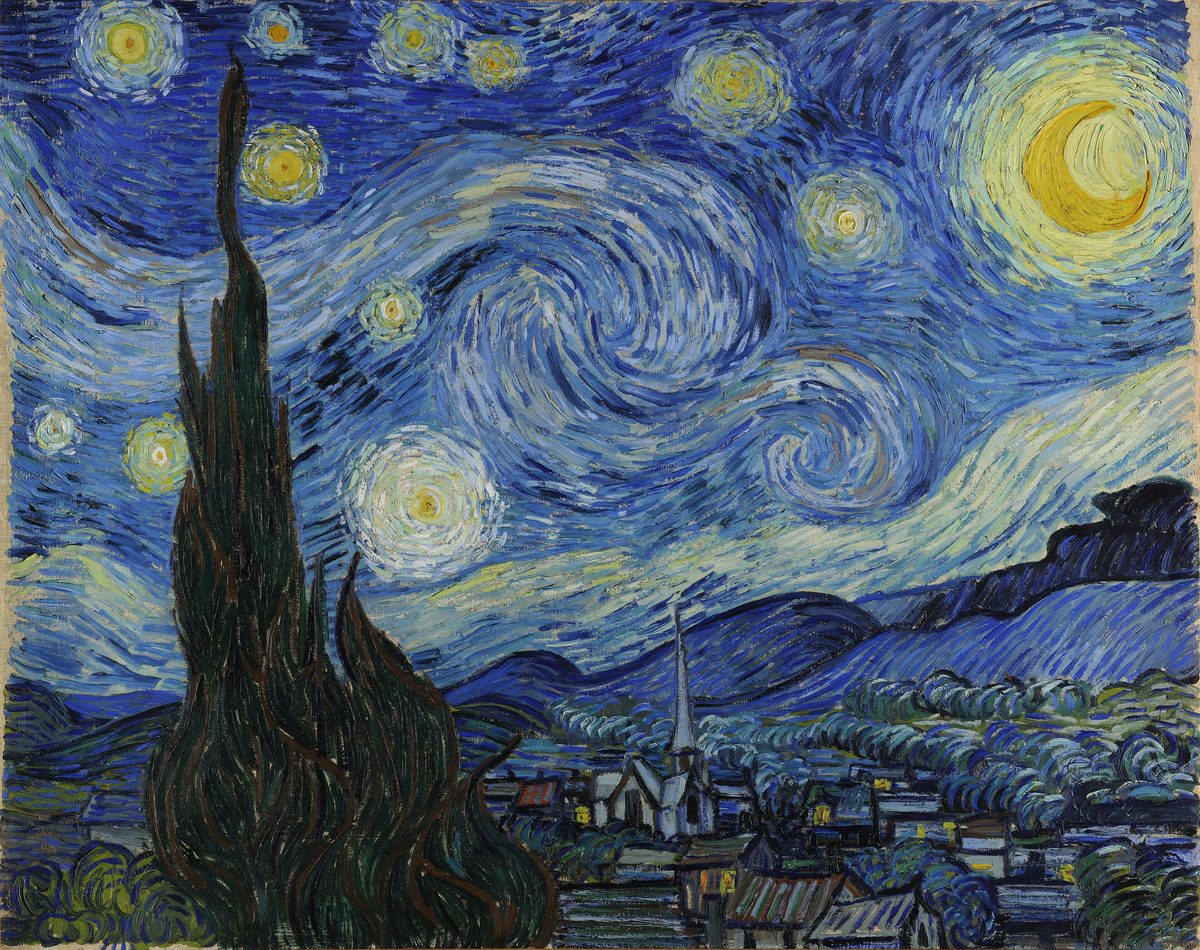
Vincent van Gogh (1853-1890), the Dutch Post-impressionist painter, made The Starry Night in 1889 in oil on canvas. The horizontal canvas measures 73.7 by 92.1 centimeters and shows a night sky above a small village, with a tall dark cypress tree rising from the lower left edge and a bright crescent moon near the upper right corner. It belongs to the Museum of Modern Art in New York City.
What the picture shows
Look first at the upper two thirds of the canvas. A night sky fills that area with short, curving strokes of blue and white. Eleven stars appear as yellow-white balls of light, each ringed by a pale halo. A bright yellow crescent moon sits in the upper right corner, also surrounded by a halo. Across the middle of the sky a large spiral winds. On the left edge a tall dark cypress tree rises like a flame from the bottom nearly to the top. In the lower right, a small village groups houses with a few lit yellow windows and a church with a tall pointed spire. Behind the village, rolling blue hills and dark mountains run toward the right edge. The paint is thick and laid down in short, rhythmic curves throughout. The palette stays close to deep blue, ultramarine, white, yellow and dark green.
When and why The Starry Night was painted
In 1889 Van Gogh was living at the asylum of Saint-Paul-de-Mausole in Saint-Rémy-de-Provence, in the south of France. He had entered the asylum in May that year after a period of mental health crises. He had painted Starry Night over the Rhone in Arles the previous year, and during his stay he painted many views of the surrounding landscape, including wheat fields, olive trees and cypresses. The Starry Night belongs to this intense period. The swirling sky and thick, rhythmic brushwork show his move beyond Impressionism toward a more expressive use of color and line. Where an Impressionist might record light, Van Gogh pushed blue, yellow and green to carry strong feeling. That direction helped make the painting an early touchstone for Expressionism.
Seeing it at home
A hand-painted copy should keep the original's five-to-four proportion, about 74 by 92 centimeters, or use the same ratio at a different size. Look for paint that sits up from the canvas in short, curving strokes, especially in the sky. The deep blue, white, yellow and dark green palette should match the original closely. The cypress should be tall and dark, not bright green, and the village should stay small with only a few lit windows.
Related paintings
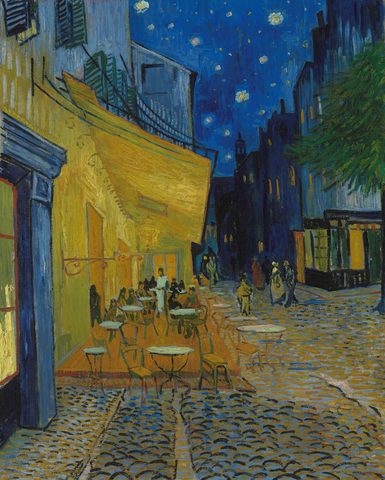
Café Terrace at Night
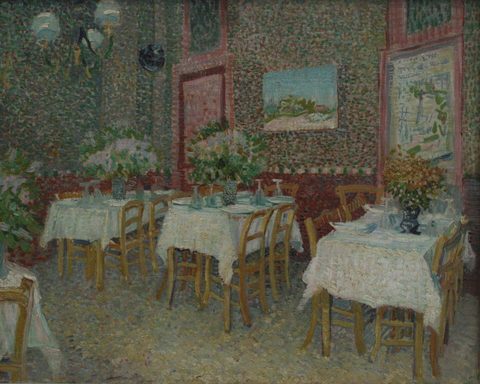
Interior of a Restaurant
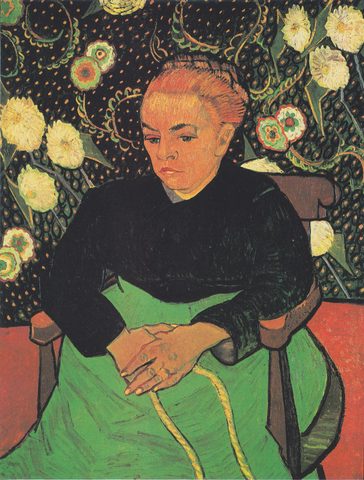
La Berceuse (Augustine Roulin)