Caravaggio
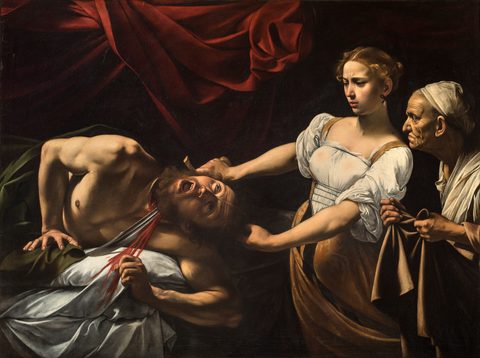
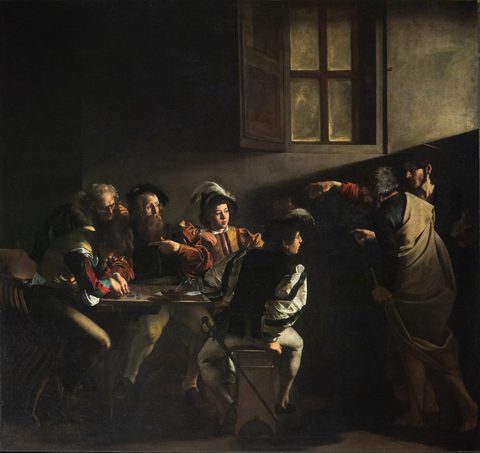
Caravaggio (1571-1610) was an Italian painter whose short career bridged the late 16th century and the early Baroque. Caravaggio paintings from Rome, Naples, Malta, and Sicily are known for their dramatic light, unidealized figures, and scenes that feel as if they are unfolding in a dark room before the viewer. He worked mostly in oil on canvas, producing religious subjects, genre scenes, and still life details that influenced painters across Europe. His work matters today because he made sacred stories physically present, from Judith's tense knife grip to Matthew's startled gesture at the tax table. Museums still hang these canvases in Rome, and visitors study them for the way he controlled shadow and human expression.
Life and training
Caravaggio was born in Milan in 1571, probably on September 29. His father Fermo Merisi worked as a household administrator for the Marquis of Caravaggio, and his mother Lucia Aratori came from a family with property in the same Lombard town. When his father died in 1577, Caravaggio was six years old. In 1584, at age 13, he was apprenticed to Simone Peterzano in Milan. Peterzano described himself as a pupil of Titian.
Caravaggio moved to Rome around 1592 with no steady income. He worked first in the studio of the Sicilian painter Lorenzo Carli, then for Giuseppe Cesari, where he painted fruit and flower details in larger compositions. After leaving Cesari, he began selling small canvases to dealers. The Cardsharps (c.1595) shows a well-dressed young man being cheated at cards by two street operators. Cardinal Francesco Maria del Monte saw such works and invited Caravaggio into his household at the Palazzo Madama around 1595. Del Monte's protection led to church commissions, including canvases for San Luigi dei Francesi and the Cerasi Chapel in Santa Maria del Popolo.
Caravaggio's paintings drew praise and dislike in equal measure. Some church patrons accepted his unidealized figures; others rejected altarpieces outright. He was often in court: charged with carrying a sword without a permit, throwing a plate of artichokes at a waiter, and writing libelous verses about a rival, Giovanni Baglione. In May 1606 he killed Ranuccio Tomassoni in a brawl and fled Rome with a death sentence. He traveled to Naples, where he received prestigious altarpiece commissions, then to Malta in 1607. In July 1608 he was made a Knight of Malta, but a brawl later that year led to his imprisonment and escape.
From Malta Caravaggio moved to Sicily, working in Syracuse, Messina, and Palermo. He sought a pardon from Rome and left for the mainland in 1610. After landing at Palo, he was mistakenly arrested and released, but the ship had sailed with his belongings. He reached Porto Ercole, where he died on July 18, 1610, at the age of 38.
Style and technique of Caravaggio paintings
Caravaggio painted in oil on canvas, often working directly on a dark ground. He built forms with strong contrasts of light and shadow rather than smooth transitions. In his mature Caravaggio paintings, figures emerge from a dark background as if lit by a single source, a method called tenebrism. This technique gives solidity to a shoulder, a sword, or a leather purse and pushes the background into near black.
His palette favored deep browns, blacks, and reds, with warm flesh tones and occasional bright accents of white or gold. Brushwork is controlled enough to describe wrinkled skin, dirty feet, and metal surfaces, but not so polished that the paint disappears. He often worked from live models posed in the studio, which helps explain the specific faces and ordinary bodies in his religious scenes.
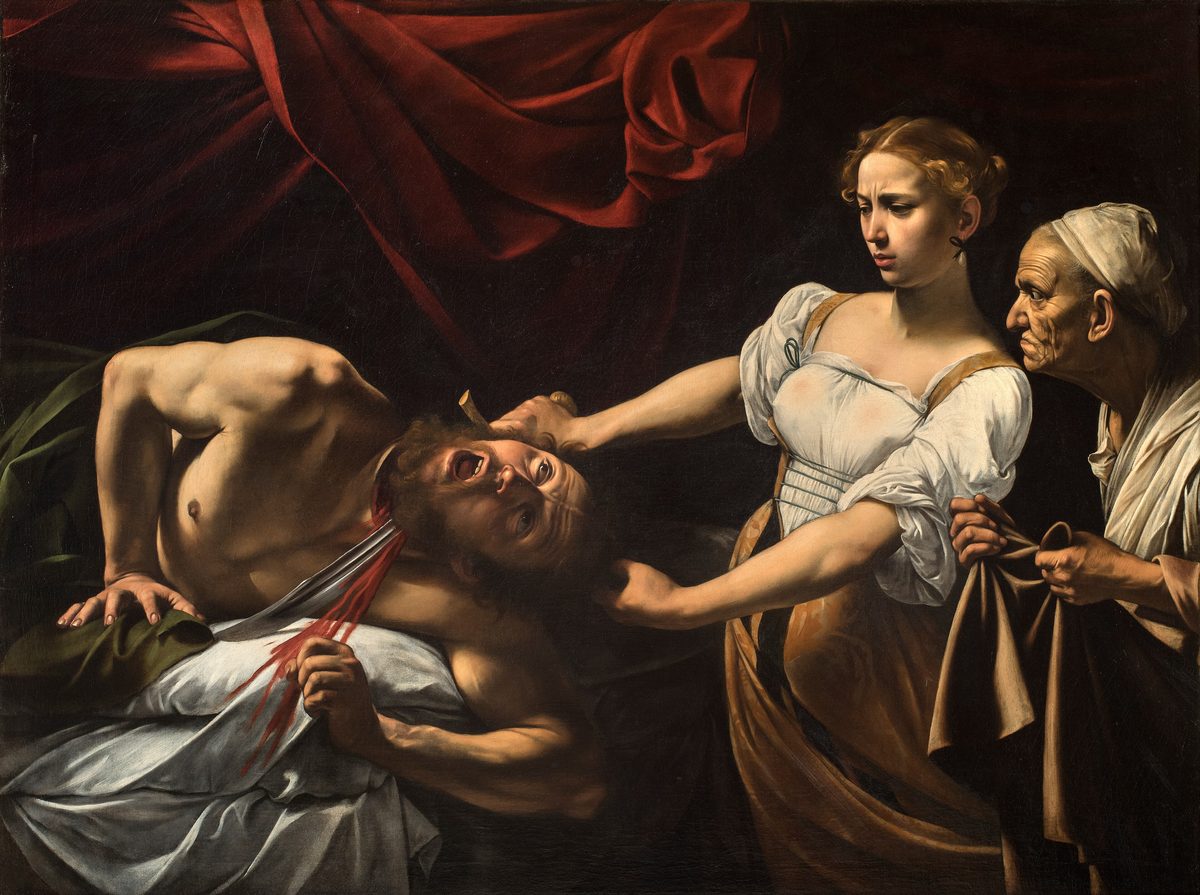
His subjects included religious narratives, street-life genre scenes, and still life. Early works such as The Cardsharps and The Fortune Teller show card players and a Romani fortune teller in contemporary clothing. Later church commissions placed saints and apostles in the same physical world. Judith Beheading Holofernes (c.1598-1599) shows the biblical heroine pressing a blade through the general's neck while blood spurts onto white sheets; the painting makes violence immediate and physical.
Caravaggio's influence on Baroque painters came from this directness. He rejected the idealized proportions of High Renaissance art and the artificial elegance of Mannerism. His use of shadow and selective light shaped the work of artists in Rome, Naples, and beyond, although he had no formal school. Later painters such as Orazio Gentileschi and Bartolomeo Manfredi borrowed this combination of dark backgrounds and ordinary bodies.
Key paintings
Judith Beheading Holofernes (c.1598-1599) shows the biblical widow Judith sawing off the head of the Assyrian general Holofernes. Her sleeves are rolled back, her brow is furrowed, and the old maidservant stands close holding a sack. The painting matters for its refusal to soften murder. It is now in the Galleria Nazionale d'Arte Antica in Rome.
The Calling of Saint Matthew (1599-1600) hangs in San Luigi dei Francesi in Rome. Christ stands at the right, pointing toward Levi the tax collector, who sits with his associates around a counting table. A diagonal shaft of light falls across the group and lands on Levi's face. The picture changed religious painting by showing a sacred summons inside a dim, contemporary Roman room.
The Cardsharps (c.1595) is a genre scene of a young man being cheated at cards. One sharper looks over his shoulder and signals an accomplice who hides cards behind his back. Painted for the open market in Rome, it attracted Cardinal del Monte's attention and helped shift Caravaggio from workshop labor to independent commissions.
The Conversion of Saint Paul (1601) in the Cerasi Chapel of Santa Maria del Popolo shows Paul lying on the ground under his horse after being struck by a heavenly light. The horse fills much of the canvas, and the saint's arms reach upward in surprise. The painting concentrates the event into a wedge of light and shadow, replacing the usual crowd of angels with the body of a stunned man and a large animal.
Where to see the originals
Many paintings by Caravaggio remain in the churches and galleries for which they were made. In Rome, Judith Beheading Holofernes is at the Galleria Nazionale d'Arte Antica, and The Calling of Saint Matthew hangs in its original chapel at San Luigi dei Francesi. The Conversion of Saint Paul is in the Cerasi Chapel at Santa Maria del Popolo. Other originals are in the Galleria Borghese in Rome and the Uffizi in Florence; The Cardsharps is in the Kimbell Art Museum in Fort Worth. The church chapels are free to enter during opening hours, but visitors should check current schedules because some sites require timed admission or have limited access during services.