Botticelli Paintings: Myth, Devotion, and Line in Early Renaissance Florence
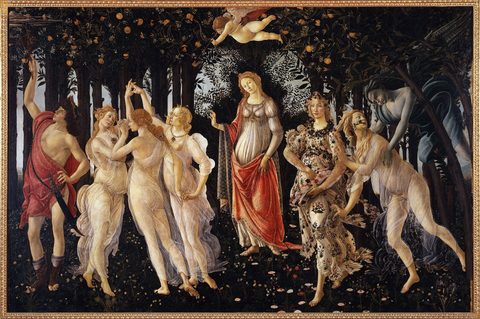
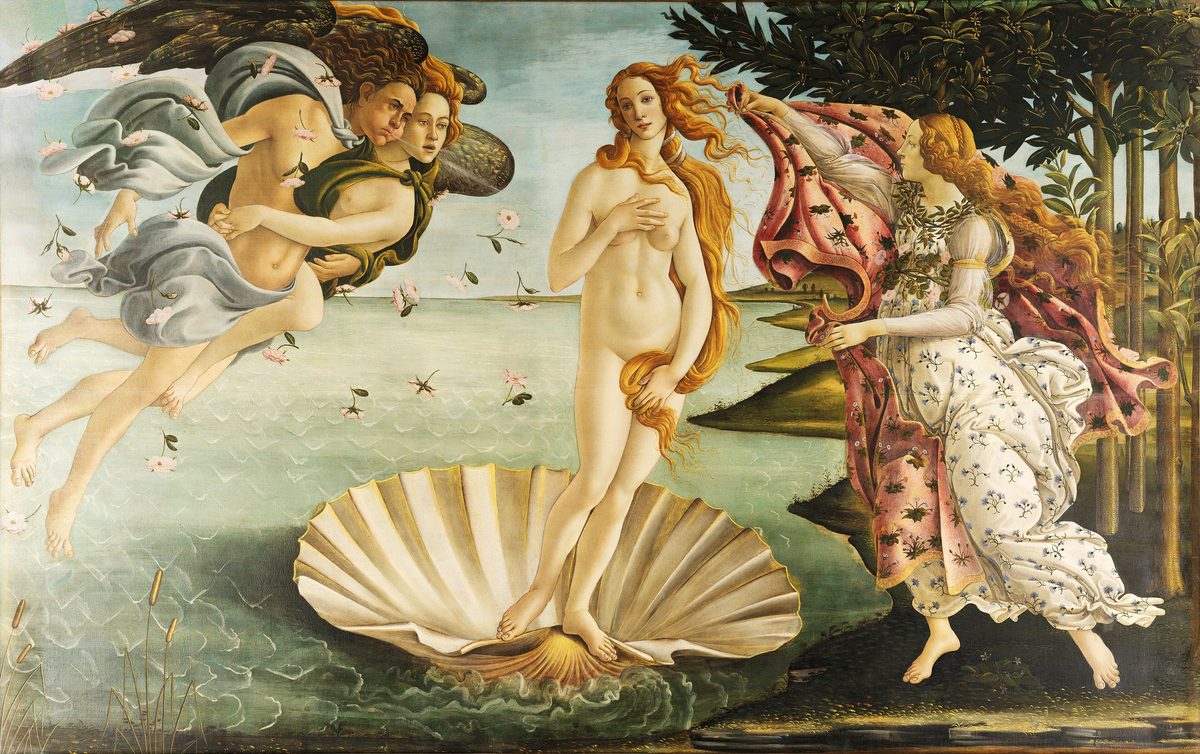
Sandro Botticelli, born in Florence in 1445 and active until 1510, was an Italian painter of the Early Renaissance. He trained in Florence and worked for leading patrons, including the Medici circle. His best known works are The Birth of Venus and Primavera, both in the Uffizi Gallery. Botticelli paintings matter today because they set a standard for linear grace and mythological storytelling. Their pale colors, flowing drapery, and precise outlines still shape how people imagine classical myth and Renaissance beauty. The large canvas of The Birth of Venus, 172.5 cm high and 278.5 cm wide, shows the goddess arriving on a shell. Primavera, a tempera panel of similar scale, stages a crowded allegory in an orange grove.
Life and training
Sandro Botticelli was born Alessandro di Mariano di Vanni Filipepi in Florence in 1445. His family lived near the church of Ognissanti, and his father worked as a tanner. As a boy he was placed with a goldsmith, but his interest shifted to painting. By the early 1460s he had entered the workshop of Fra Filippo Lippi, one of the leading painters of Florence and Prato. Lippi's delicate Madonnas, with their pale faces and fine outlines, shaped Botticelli's early manner. Around 1470 Botticelli opened his own workshop in Florence. He also studied the work of the Pollaiuolo brothers, whose muscular figures and attention to movement appear in his early panels. This combination of linear grace and physical energy defined his training years.
Botticelli's rise came through Florentine patronage. He painted altarpieces, portraits, and cassone panels for wealthy families. The Adoration of the Magi, made around 1475 for the church of Santa Maria Novella, includes portraits of members of the Medici family and a self-portrait on the right side of the crowd. In 1481 Botticelli traveled to Rome as part of a team of Florentine artists hired to fresco the Sistine Chapel walls. He painted three large scenes there: The Trials of Moses, The Temptation of Christ, and The Punishment of the Sons of Korah. After returning to Florence by 1482, he produced his most celebrated secular works. The Birth of Venus and Primavera, both from the 1480s, were painted for a secular setting in or near Florence, probably for a member of the Medici circle.
The political and religious climate of Florence shifted in the 1490s. The preacher Girolamo Savonarola condemned worldly art, and Botticelli's late paintings became more severe and devout. The Mystical Nativity of 1500 to 1501, now in London, shows a visionary scene with crowded angels and an inscription about the troubles of Italy. He received fewer commissions after this period, though he continued to work. Botticelli died in Florence in 1510 and was buried in the church of Ognissanti, near his family home. His late religious images remain less famous than the mythological panels, but they show the same emphasis on line and expressive gesture.
Style and technique
Sandro Botticelli paintings are usually executed in tempera, a medium made from pigment mixed with egg yolk. The Birth of Venus is tempera on canvas, while Primavera is tempera on panel. Tempera dries quickly and produces clear, matte colors, which suits Botticelli's precise drawing. He built up forms with fine, almost invisible brush marks and used pale flesh tones, light blues, soft greens, and rose pink. In Primavera the orange grove is painted in dark greens against a pale sky, while the figures stand in a shallow, frieze-like arrangement. In The Birth of Venus the central figure is outlined with a firm contour that separates her from the sea and sky. Botticelli cared more about rhythmic line than about natural weight or deep space. His figures often hover or stand on tiptoe, and drapery falls in long, curling folds that follow an internal rhythm rather than gravity alone. He drew from classical sculpture and from the lyrical Madonnas of Fra Filippo Lippi, but he flattened space and elongated bodies for decorative effect. His religious pictures use the same vocabulary: slender saints, tilting heads, and expressive hands. The subject matter ranges from Christian altarpieces to portraits and large mythological allegories. In the 1490s his palette darkened, and his forms became more angular and intense as he responded to the spiritual climate of Savonarola's Florence. The late Mystical Nativity, for example, uses crowded, twisting figures and a compressed composition. Across his career, Botticelli's technique changed little, but the mood of his work shifted from courtly grace to anxious devotion.
Key Botticelli Paintings
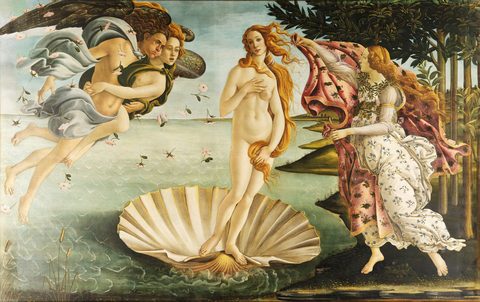
The Birth of Venus, painted around 1478 to 1485, is a tempera on canvas that measures 172.5 by 278.5 cm. It shows Venus standing nude on a scallop shell, blown toward the shore by Zephyr and Chloris while a female figure waits with a flowered cloak. It became one of the most recognizable images of classical myth in Western art and marked a shift toward large-scale secular painting in Florence.
Primavera, from 1480 to 1485, is a tempera on panel of 203.0 by 314.0 cm. In an orange grove, Venus stands at the center, Mercury is on the left, and the Three Graces join hands. On the right, Zephyr grasps Chloris, who transforms into Flora scattering flowers. The painting is an allegory of spring and love, likely tied to Neoplatonic ideas about beauty and virtue.
The Adoration of the Magi, from around 1475, shows the biblical kings before the Virgin and Child in a ruined classical setting. Botticelli placed portraits of Medici family members among the crowd and included his own self-portrait on the right edge. Its clear organization and courtly detail made it a key early commission.
Venus and Mars, from about 1485, shows Venus reclining and watchful while Mars lies asleep, surrounded by playful satyrs with his armor. The contrast between alert love and dormant war gives the panel a wry moral edge, and the soft modeling shows Botticelli's later refinement.
The Mystical Nativity, painted in 1500 to 1501, shows the Nativity with angels and shepherds in a crowded, circular composition. An inscription in Greek links the scene to the troubles of Italy and the expectation of Christ's second coming. It reflects the intense religious mood of Savonarola's Florence and the darker turn in Botticelli's late style.
Where to see the originals
The Uffizi Gallery in Florence holds the two main works described above. Its early Renaissance rooms display The Birth of Venus, a large tempera on canvas of 172.5 by 278.5 cm, and Primavera, a tempera on panel of 203.0 by 314.0 cm. The same museum also owns The Adoration of the Magi from around 1475. The National Gallery in London shows Venus and Mars and The Mystical Nativity, which give a broader view of the artist's secular and religious modes. In Florence, the church of Ognissanti preserves Botticelli's fresco of Saint Augustine in His Study and is the site of the artist's tomb. This means Florence remains the main center for studying his work, while London holds two important panels.