Symbolism in Art
Symbolism in art developed in the late nineteenth century, mainly in France and Belgium, and then spread across Europe. Painters turned away from direct observation of modern life and from the naturalism that dominated much of the 1870s and 1880s. They preferred dreamlike imagery, private myth, and flattened compositions. The movement gave priority to feeling, memory, and suggestion rather than to recording the visible world. Works in this catalogue by Paul Gauguin, Gustav Klimt, and Wassily Kandinsky date from 1897 to 1923.
Painters
Paintings
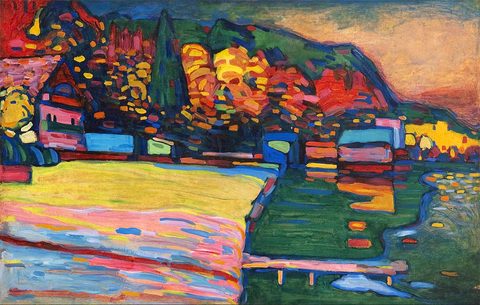
Lake Starnberg
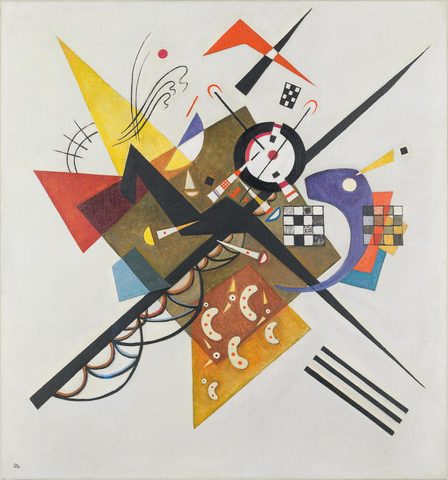
On White II
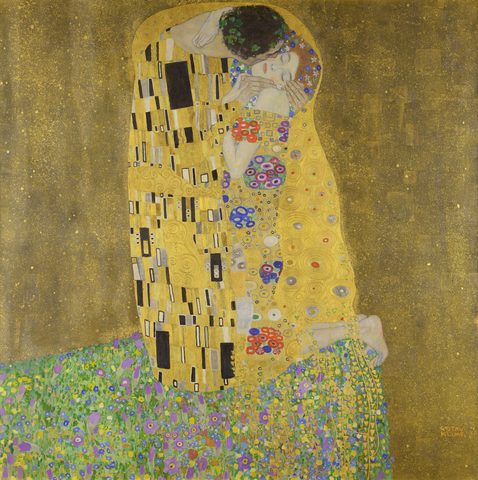
The Kiss
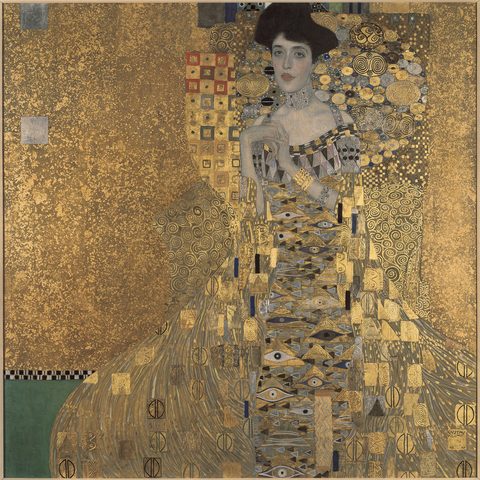
Portrait of Adele Bloch-Bauer I
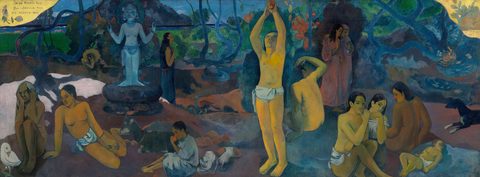
Where Do We Come From? What Are We? Where Are We Going?
What Defines Symbolism in Art
Symbolist paintings often favor interior states over observed reality. Subjects include dreams, myths, death, desire, and spiritual searching. Figures can appear weightless or isolated, and settings sometimes simplify into bands of color or decorative pattern. Painters used flat areas of pigment, gold leaf, and strong outlines rather than the modeled volumes and broken brushwork common in Impressionism. Light often looks unreal: it glows from within a landscape or wraps a couple in a decorative halo, as in Gustav Klimt's The Kiss. Small easel paintings are common, but the period also includes large allegorical canvases such as Paul Gauguin's Where Do We Come From? What Are We? Where Are We Going?. Symbolism in art deliberately leaves meaning open. A painting may hint at a narrative but rarely states it completely. A color, a gesture, or a repeated shape can carry several associations at once, so the viewer has to read the image slowly rather than recognize a single story.
Symbolism painters in this catalogue
Wassily Kandinsky, born in 1866 and later a French citizen, moved from observed landscape toward color as an emotional and spiritual force. Lake Starnberg (1908) reduces a lakeside view to broad tonal areas, while On White II (1923) leaves behind direct description for shapes and lines on a white ground. His turn toward abstraction is often linked to the Symbolist idea that color and form could carry meaning beyond objects.
Gustav Klimt, born in Austria in 1862, filled portraits and allegories with patterned surfaces and gold. The Kiss (1907 to 1908) and Portrait of Adele Bloch-Bauer I (1907) show his interest in the body dissolving into ornament. Klimt often set faces against flat gilded grounds, so the figure seems to hover between portrait and decorative emblem.
Paul Gauguin, born in 1848 in France, sought symbolic subjects outside Parisian naturalism. Where Do We Come From? What Are We? Where Are We Going? (1897 to 1898) asks a large allegorical question through Tahitian figures and a tropical landscape. Gauguin arranged figures and color in a dreamlike sequence, leaving the narrative open.
Where to see it
Symbolist works sit in major collections in Europe and the United States. The paintings listed here are held by Tate Modern in London, Centre Pompidou in Paris, Belvedere in Vienna, Neue Galerie in New York, and Museum of Fine Arts Boston.