Romantic Paintings
Romantic paintings emerged in Europe in the late 18th and early 19th centuries, as artists turned away from the measured order of Neoclassicism and toward strong feeling, individual imagination, and the power of nature. The main phase ran from around 1790 to 1850. The movement flourished from Britain and Germany to Spain, and its painters worked in oil, watercolor, and printmaking. This catalogue includes works by J. M. W. Turner, Francisco Goya, and Caspar David Friedrich, three figures who shaped the Romantic outlook in very different ways.
Paintings
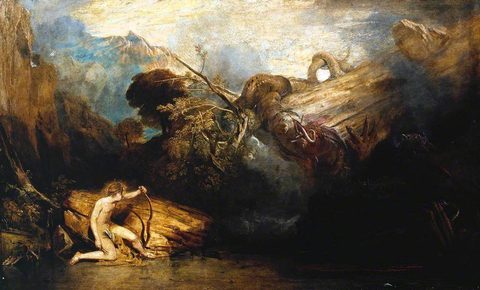
Apollo and Python
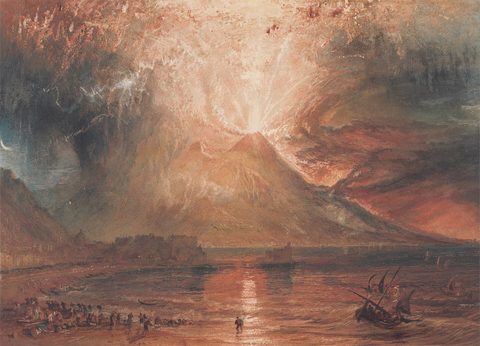
Eruption of Vesuvius
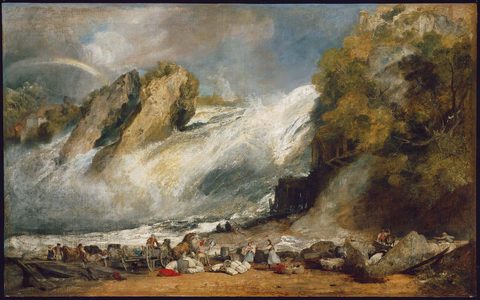
Fall of the Rhine at Schaffhausen
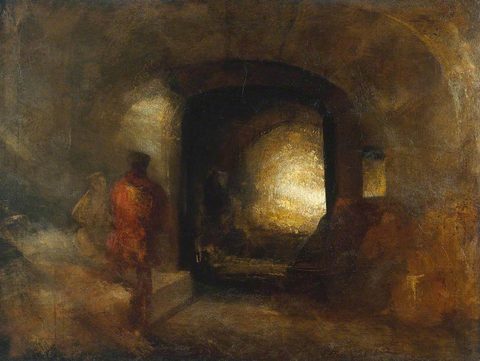
Figures in a Building
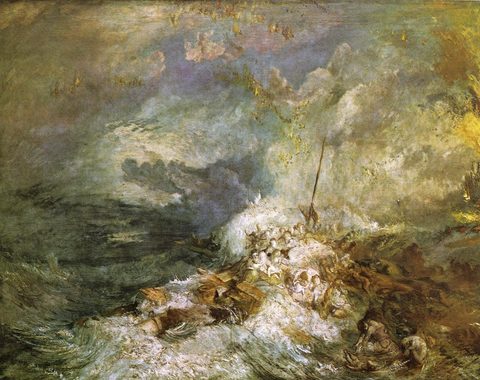
Fire at Sea
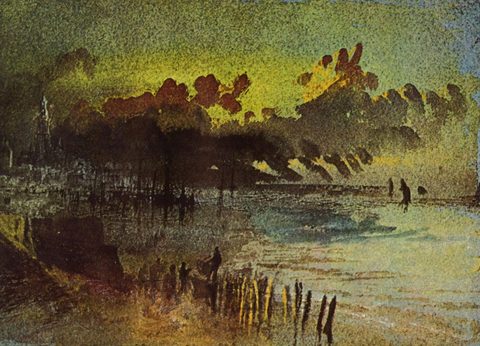
Honfleur
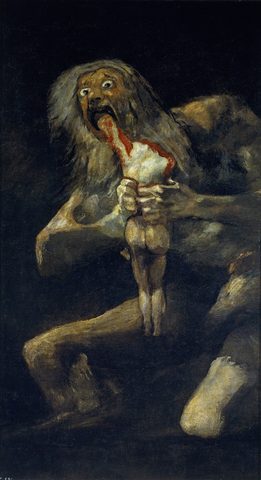
Saturn Devouring His Son
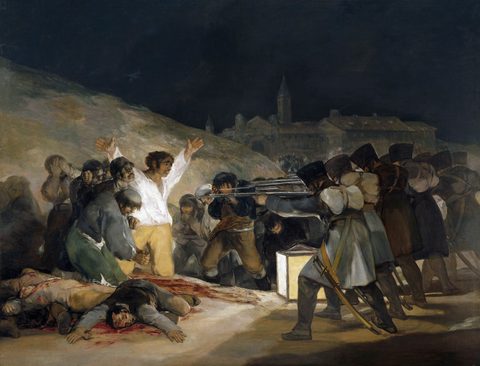
The Third of May 1808
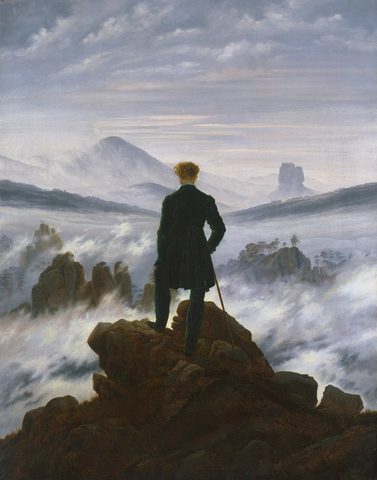
Wanderer above the Sea of Fog
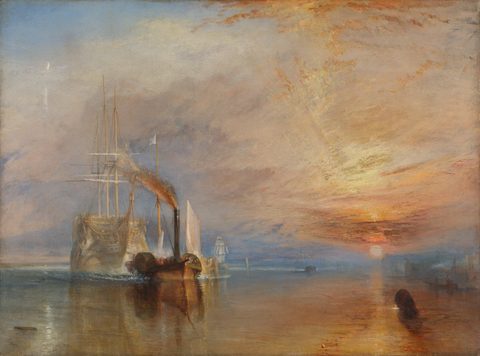
The Fighting Temeraire
What defines romantic paintings
Romantic painters chose subjects that carried emotional weight: shipwrecks, volcanic eruptions, lonely mountain peaks, night fires, and historical violence. In Turner's The Fighting Temeraire, the old warship is towed toward a glowing sunset; in Friedrich's Wanderer above the Sea of Fog, a single figure stands above a sea of mist. In many works, loose brushwork, strong contrasts of dark and light, and saturated color replaced the smooth finish and clear outlines of Neoclassical painting. Oil on canvas was common, but watercolor sketches and small landscape studies were also important.
Light often became the main drama. Moonlit ruins, storm clouds, the red glow of lava, and the last flare of a sunset gave the pictures a sense of forces larger than the individual. Many of these painters did not aim for a stable, balanced composition. They tilted horizons, pushed figures to the edge, and let weather fill the frame.
Romanticism painters in this catalogue
British painter J. M. W. Turner (1775-1851) made light, weather, and the sea central to his art. Works such as Eruption of Vesuvius, Fall of the Rhine at Schaffhausen, and Fire at Sea show boiling smoke, rushing water, and the glow of flames. The Fighting Temeraire, painted in 1839 and now in the National Gallery, turns the end of a warship into a quiet, golden farewell.
Spanish painter Francisco Goya (1746-1828) brought Romantic intensity to Spanish history and private nightmare. The Third of May 1808, from 1814, shows a firing squad at night, with a man in a white shirt throwing his arms open. Saturn Devouring His Son (1820-1823) uses raw, dark paint to depict a myth as bodily horror. Both hang in the Museo del Prado.
German painter Caspar David Friedrich (1774-1840) worked in Germany and focused on solitary figures in vast landscapes. Wanderer above the Sea of Fog, painted around 1818, shows a man on a rocky summit looking out over fog and ridges. The painting is in the Hamburger Kunsthalle.
Where to see it
Major European and American museums with strong 19th-century collections hold the core of Romantic painting. Tate Britain and the National Gallery in London show Turner. The Museo del Prado in Madrid has Goya, and the Hamburger Kunsthalle has Friedrich. Several of the works listed above hang in these collections.