Post-Impressionism
Post-Impressionism was a broad current in French painting that emerged after the last Impressionist exhibition and ran through the late 1880s and 1890s. It was less a unified school than a set of individual directions, as artists in Paris and its surroundings kept the Impressionist interest in modern life and natural light but gave more weight to structure, memory, and personal expression. The label was applied later to painters who had moved past the quick record of a fleeting moment toward more deliberate arrangements of color and form.
Painters
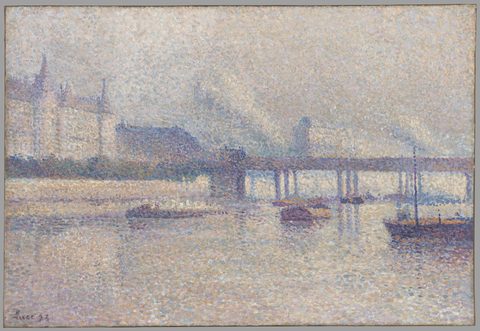
Paintings
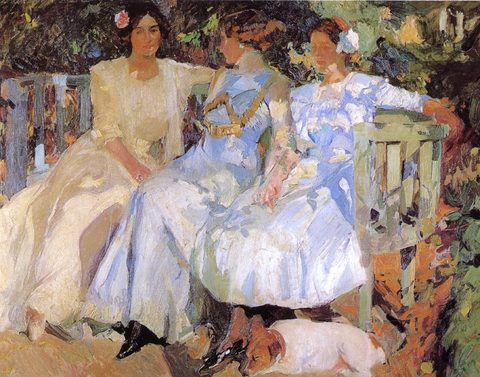
My Wife and Daughters in the Garden
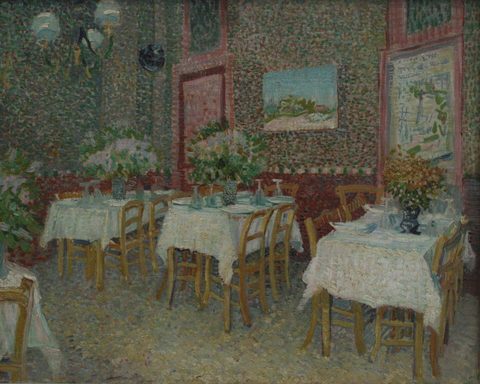
Interior of a Restaurant
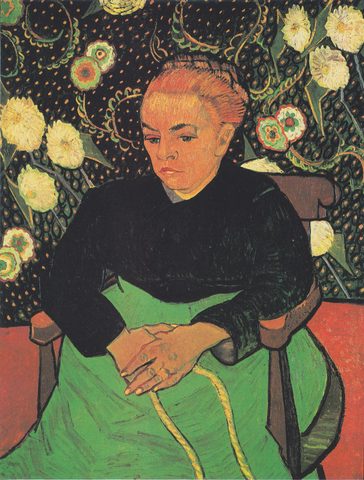
La Berceuse (Augustine Roulin)
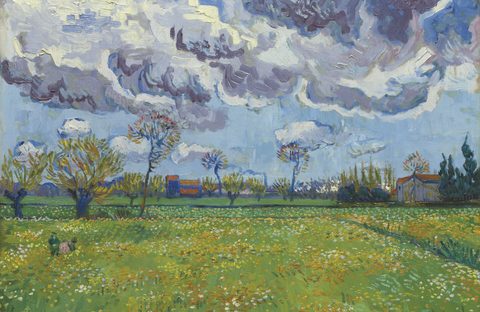
Landscape under a Stormy Sky
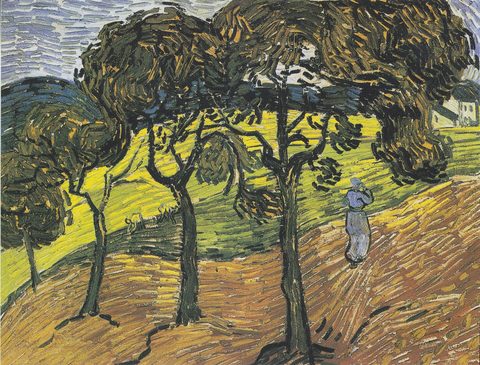
Landscape with Trees and Figures
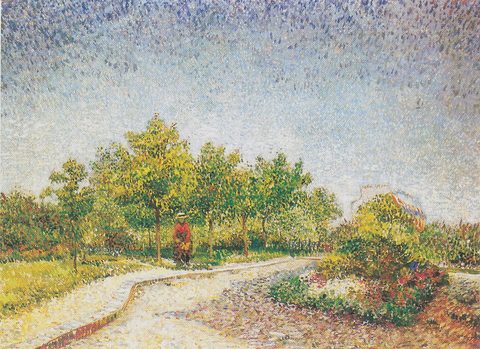
Lane in Voyer d'Argenson Park at Asnieres
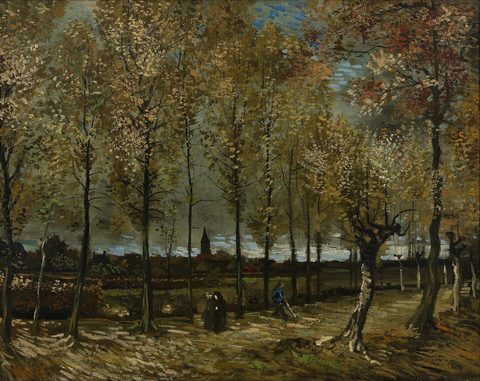
Lane with Poplars
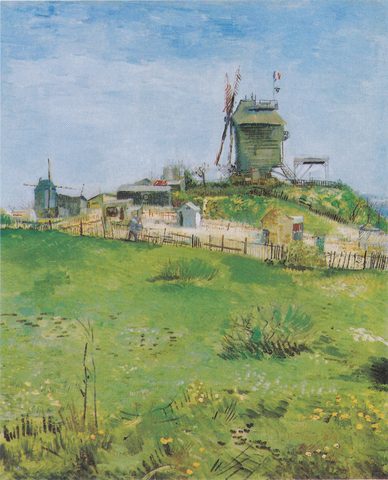
Le Moulin de la Galette
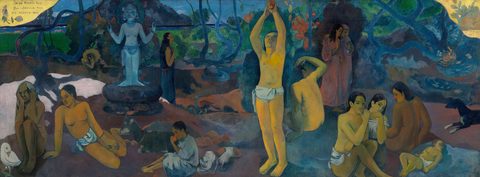
Where Do We Come From? What Are We? Where Are We Going?
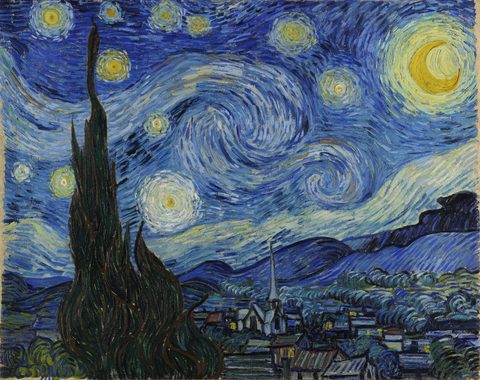
The Starry Night
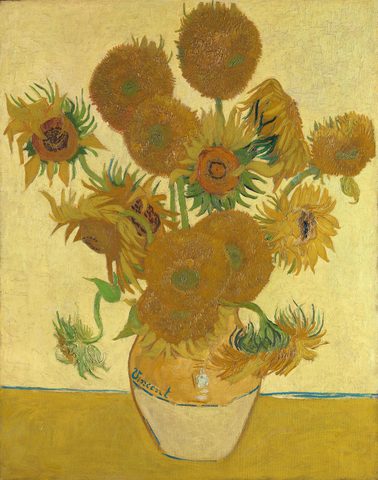
Sunflowers
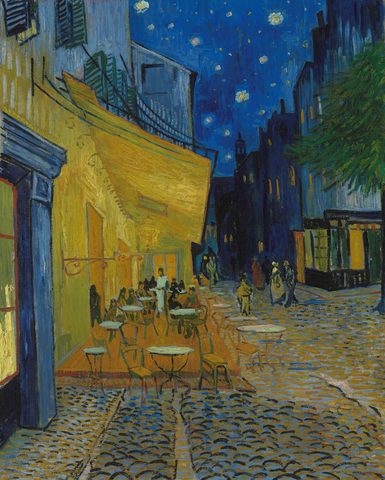
Café Terrace at Night
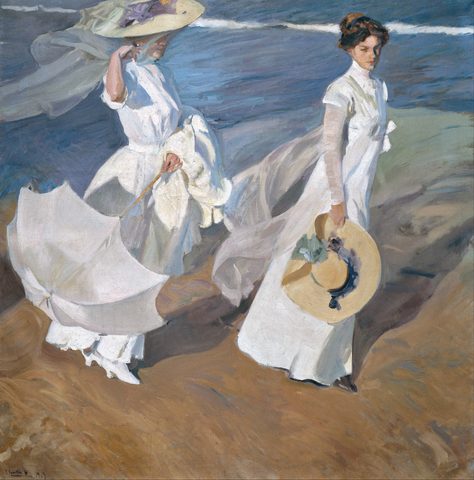
Strolling along the Seashore
What defines Post-Impressionism painting
Post-Impressionism paintings often take the subjects of modern life that the Impressionists favored: city streets, cafés, parks, still lifes, portraits, landscapes, and scenes of family leisure. The difference lies in treatment. Brushwork can be broken into separate, directional strokes, as in a Van Gogh landscape, or flattened into broad color areas with strong outlines, as in Gauguin's later compositions. Palette becomes a vehicle for emotion rather than a record of optical effect. Shadows may be blue or green; skies may be yellow or violet; flesh may be modeled with deliberate, unnatural color. Compositions often show a clear underlying geometry: a road cut diagonally, a table arranged frontally, a horizon placed high. Typical formats include easel-size canvases, works on paper, and occasional large decorative schemes. Compared with Impressionism, the movement is less concerned with spontaneous appearances and more with durable form, memory, and symbol.
Post-Impressionism painters in this catalogue
Vincent van Gogh (1853-1890) gave Post-Impressionism a distinctive surface of short, directional brushstrokes and colors chosen for feeling as much as for description. Among the works in this catalogue are Sunflowers (1888) and The Starry Night (1889), both built from rhythmic marks and strong contrasts.
Paul Gauguin (1848-1903) moved toward flat color areas, simplified outlines, and symbolic subjects. His monumental Where Do We Come From? What Are We? Where Are We Going? (1897-1898) in this catalogue shows that turn away from naturalistic detail.
Joaquín Sorolla (1863-1923) worked in Spain in the same decades and is usually grouped with Impressionism rather than this movement. My Wife and Daughters in the Garden (1910) and Strolling along the Seashore (1909) show his rapid, light-filled brushwork and his interest in figures in open air.
Maximilien Luce (1858-1941) applied small, separate strokes of pure color, a technique often grouped with the broader Post-Impressionist reaction against smooth academic finish. His subjects from modern city life sit comfortably with the movement's focus on contemporary experience.
Where to see it
Public collections hold groups of Post-Impressionism works. The Kröller-Müller Museum, the Museum of Modern Art, and the National Gallery all have paintings by Van Gogh. The Museum of Fine Arts Boston holds Gauguin's Where Do We Come From? What Are We? Where Are We Going?, and the Sorolla Museum shows Sorolla.