Impressionist Artists and Their Paintings
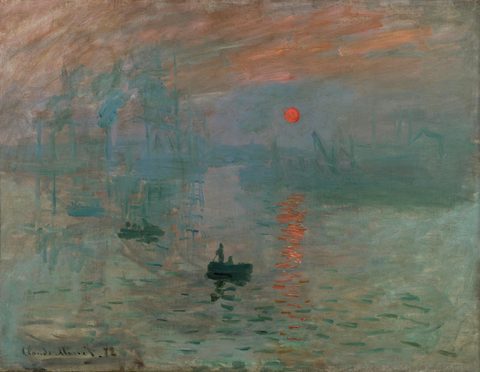
Impressionist artists worked mainly in France between the late 1860s and the late 1880s. Paris, the Seine valley, and the Normandy coast became their open-air studios. They exhibited as a group for the first time in 1874, when Claude Monet showed Impression, Sunrise, the painting that gave the movement its name. The artists shared a looser way of painting; they wanted to show modern life as they saw it, not as academic tradition prescribed. Their scenes included rivers, cafés, gardens, dancers, and family life. These subjects and methods separated them from the previous generation.
What defines Impressionism painting
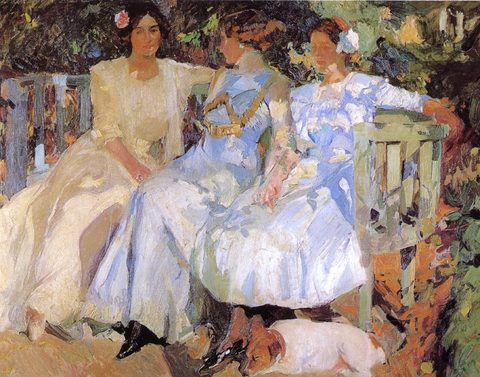
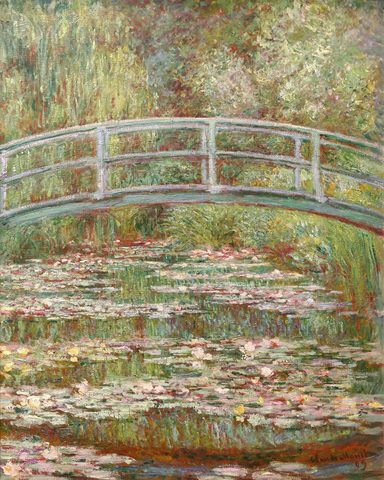
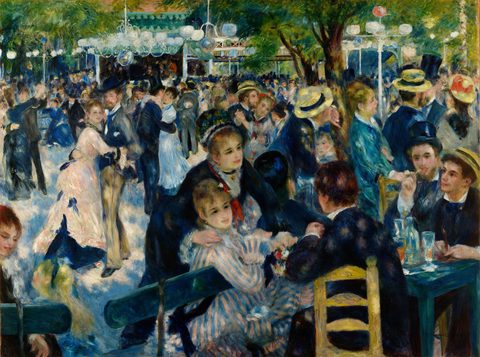
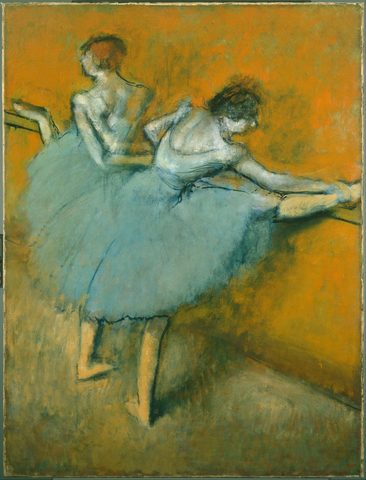
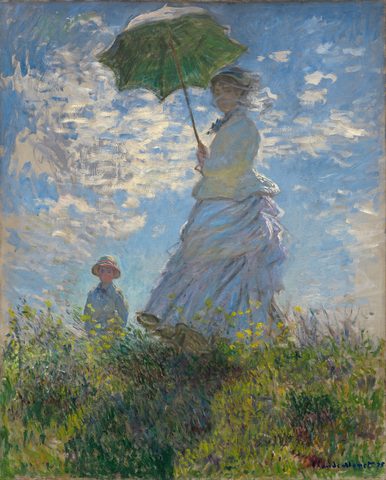
Impressionism painters focused on modern life rather than historical or mythological scenes. Their subjects included Paris streets, riverside leisure, ballet classes, gardens, and quiet domestic moments. Instead of smooth, blended finishes, they used visible brushstrokes and placed touches of pure color side by side, allowing colors to mix in the eye. They often worked outdoors, so natural light and its changes became a central concern. Shadows were frequently painted with blue or violet rather than black. Canvases were usually smaller than the large history paintings favored by the Salon, and the compositions felt like brief, unposed glimpses. They recorded fleeting conditions: sunlight through leaves, haze over water, a child's white dress in shade. The approach contrasted with the academic art of the period, which relied on smooth surfaces, controlled drawing, and fixed studio light.
Impressionist artists in this catalogue
Claude Monet painted outdoor light along the Seine and later in his garden at Giverny. Impression, Sunrise (1872) gave the movement its name; Bridge over a Pond of Water Lilies (1899) shows his late focus on water and reflection.
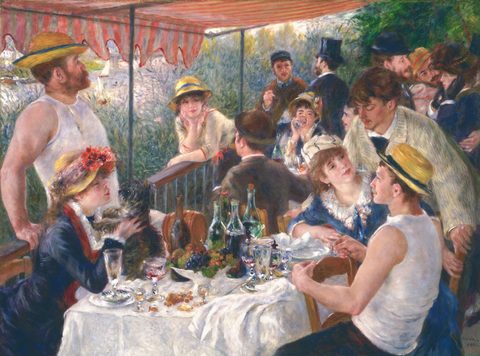
Pierre-Auguste Renoir favored Parisian sociability and dappled sunlight. Bal du moulin de la Galette (1876) and Luncheon of the Boating Party (1880 to 1881) are scenes of friends gathering in the open air.
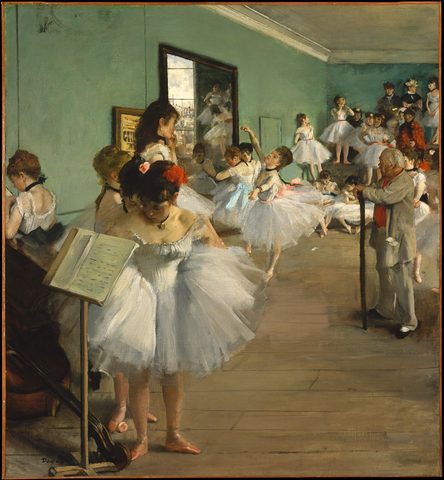
Edgar Degas painted ballet rehearsals and dancers in indoor rehearsal rooms. The Dance Class (1874) and Dancers at the Barre (1900) use cut-off figures and unusual viewpoints instead of formal poses.
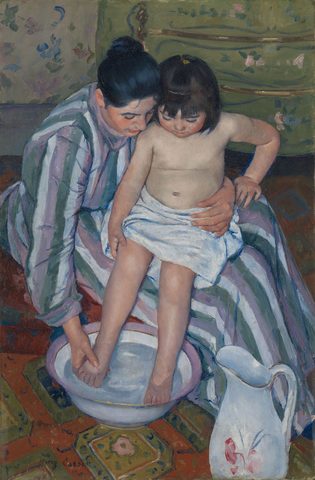
The American impressionist artist Mary Cassatt concentrated on women and children in domestic settings. The Child's Bath (1893) shows a mother and child seen from above, with simplified shapes and soft color.
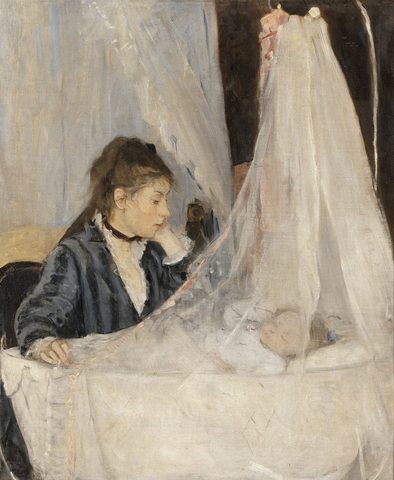
Berthe Morisot belonged to the core group and exhibited with them. The Cradle (1872) is an intimate scene of a mother watching a baby; brushwork stays loose and sketchlike.
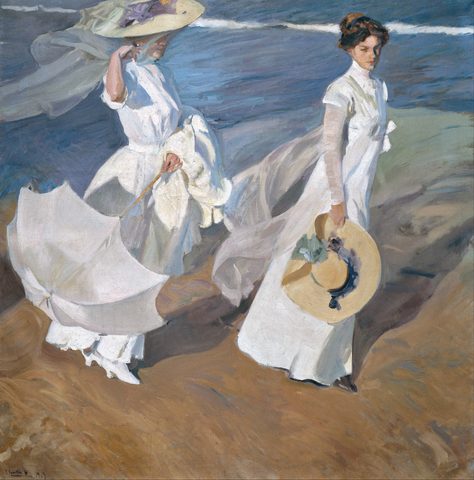
Joaquín Sorolla worked later than the French group, often on Spanish beaches. Strolling along the Seashore (1909) and My Wife and Daughters in the Garden (1910) use bright daylight and free brushwork.
Where to see it
Many famous impressionist paintings are in major public collections: the Musée d'Orsay in Paris, the Metropolitan Museum of Art in New York, the Art Institute of Chicago, and the National Gallery of Art in Washington, D.C. The Musée Marmottan Monet in Paris holds a large Monet collection.